Product5 min read
Analytics you can trust, and data you can take with you
What the merchant dashboard counts, why day boundaries follow your timezone, and why exporting your own customer list is not a premium feature.
A loyalty program is worth running if people come back more than they otherwise would. Everything on the analytics page exists to answer that question honestly, which mostly means resisting the temptation to make the numbers look good.
What is counted
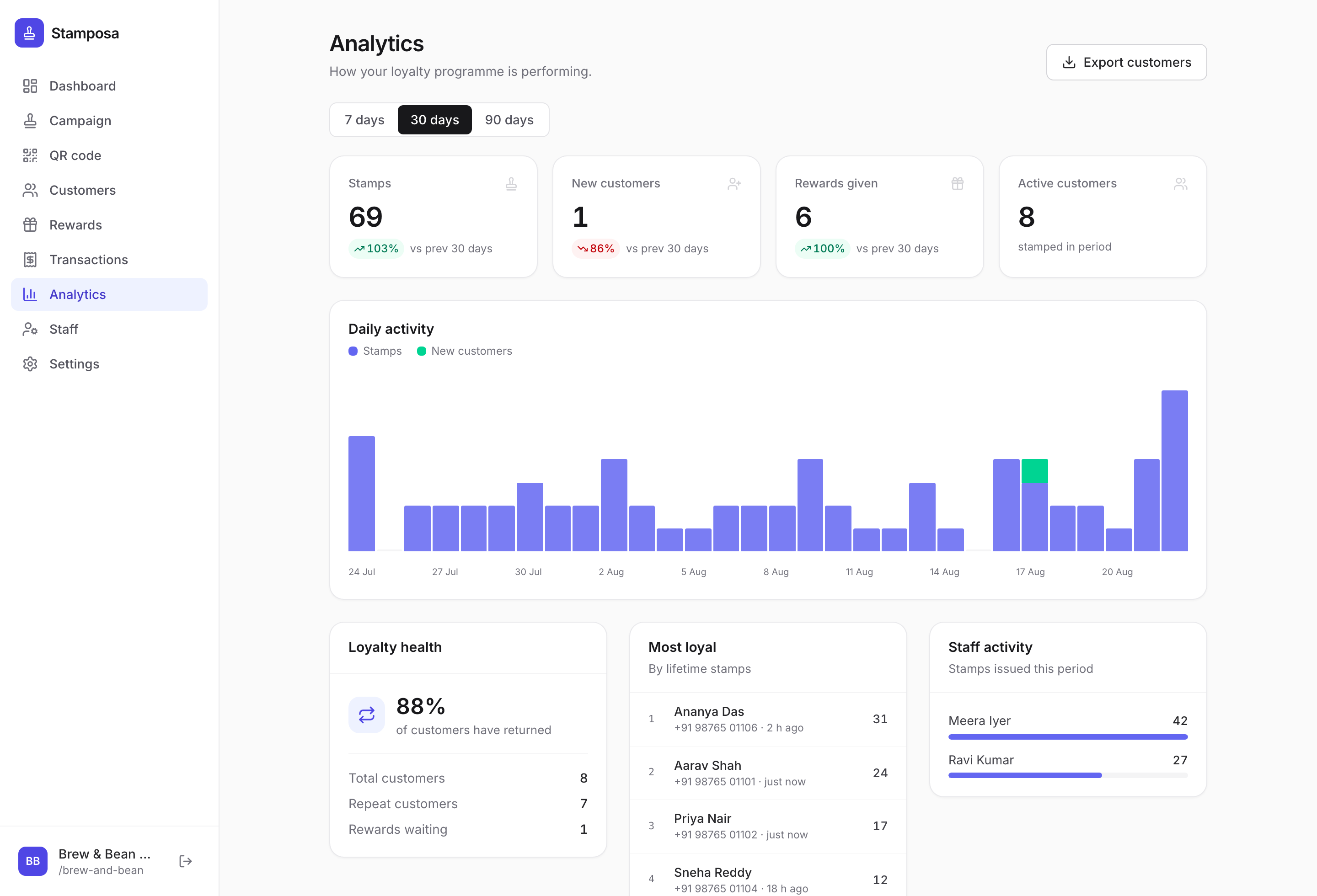
- Stamps is the net figure for the period: stamps added minus stamps undone. A stamp that was reversed a minute later does not count.
- New customers is people who joined in the period, whether they scanned the QR themselves or were enrolled at the counter.
- Repeat rate is the share of your customers who have come back for a second stamp. It is the number to watch. If it is not moving, the program is not working, whatever the stamp total says.
- Rewards splits into earned and handed over, because a reward that was earned but never collected is a different kind of signal.
Each figure shows the same period immediately before it, over 7, 30 or 90 days, so a number always comes with the context of whether it went up or down.
Your day, not the server’s
A shop that closes at 1 a.m. has a Friday night that ends on Saturday. If the software counts days in UTC, that night gets split in two and both halves look quiet. Every Stamposa merchant sets a timezone in settings, and every daily figure, chart bucket and “today” on the dashboard uses it.
The same setting drives the busiest-days chart, so the bar for Friday is your Friday.
The dashboard is live
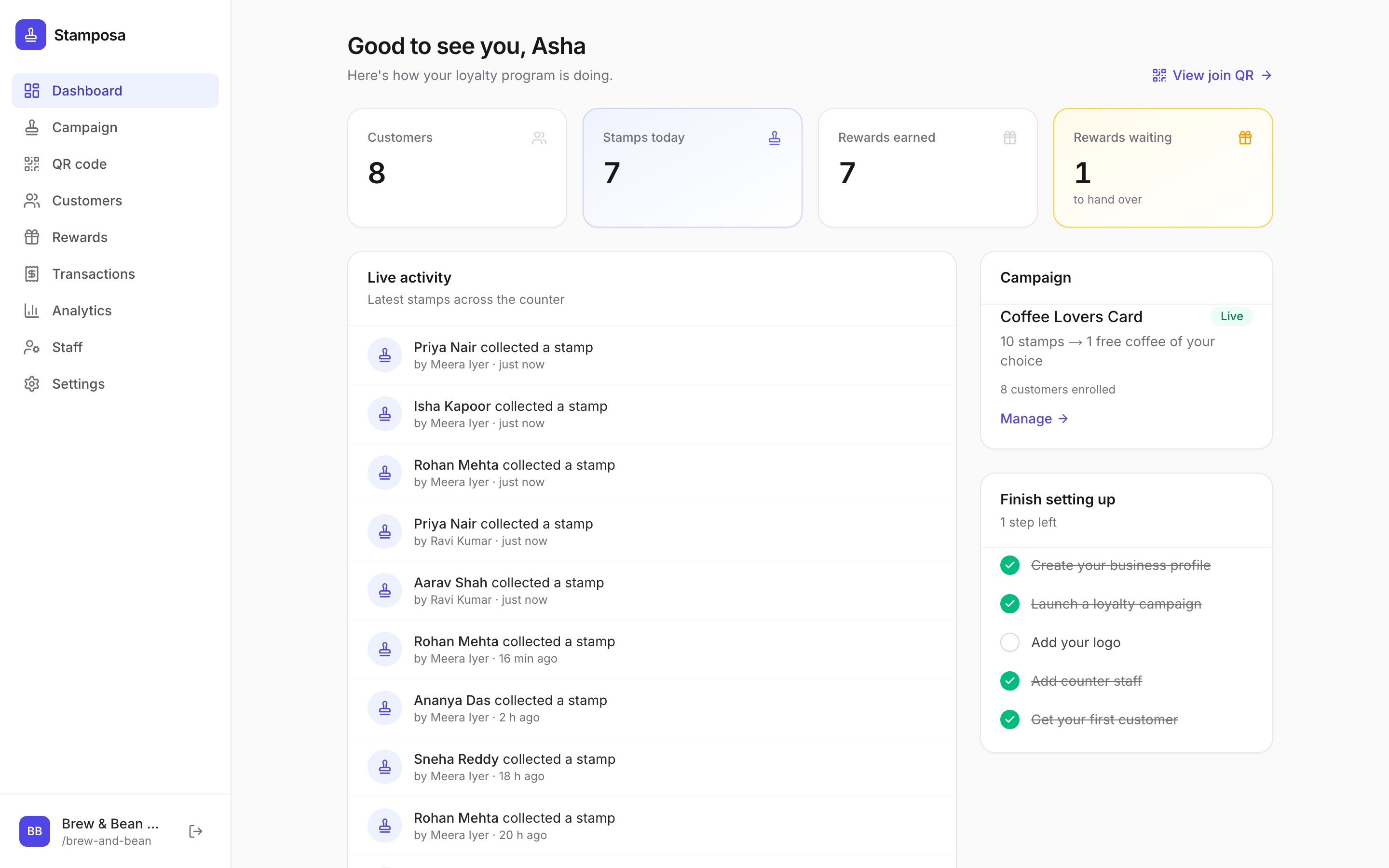
The home screen refreshes itself every 15 seconds. Four cards at the top show customers, stamps today, rewards earned and rewards waiting, and beneath them a feed of stamps as they happen at the counter, with the staff member’s name. An owner who is not in the shop can still see it working.
The list is yours to take
The customer list, with names, contact details, stamp counts and last-visit dates, exports to CSV from the customers page. So does the full transaction ledger. There is no tier where this is switched on. If you leave Stamposa, you leave with your customers.
The export carries phone and email as separate columns, and a customer’s consent record, with the exact wording they agreed to and the channel they agreed on, sits on their profile. If you send marketing, you can show what each person opted into.